The mango that broke a market
It is peak mango season in India. The Alphonso harvest is at its richest, the Kesar at its most fragrant.
CM Yogi added that, inspired by Dharti Aaba’s legacy, Prime Minister Narendra Modi declared November 15 as Tribal Pride Day (Janjatiya Gaurav Diwas).




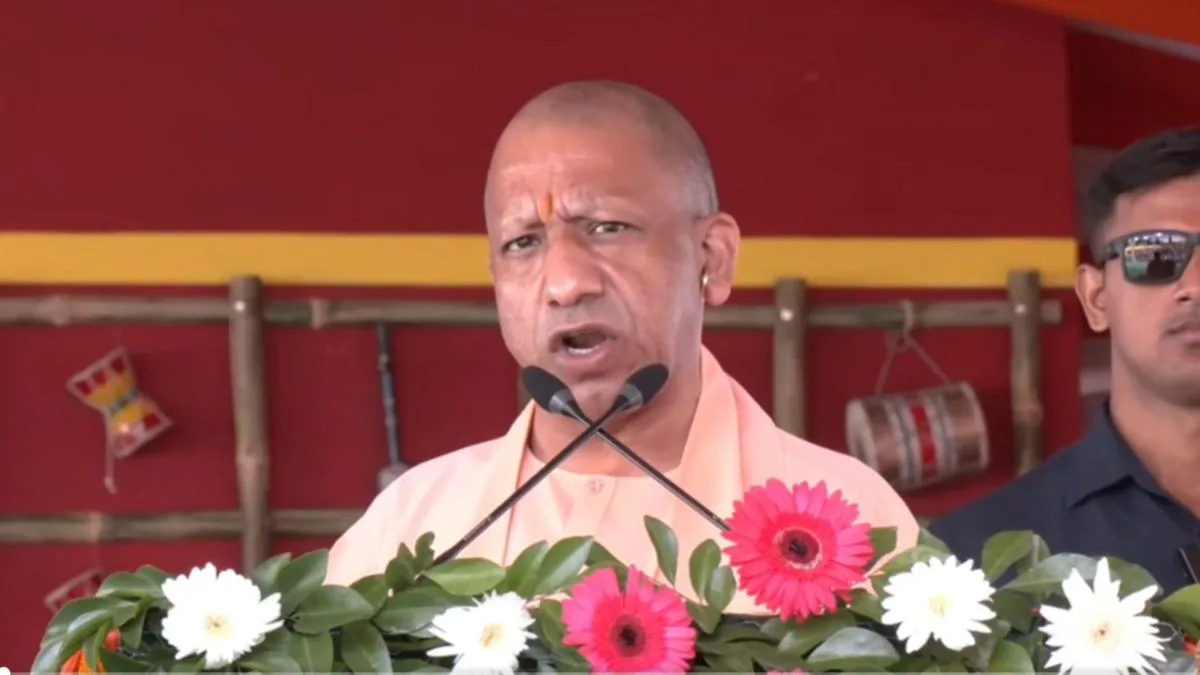
File Photo
Uttar Pradesh Chief Minister Yogi Adityanath said that Dharti Aaba Birsa Munda was a staunch advocate of India’s independence. He led a powerful movement against British rule and was imprisoned by the colonial government, where he passed away at the age of just 25 in Ranchi Jail. Birsa Munda inspired the tribal community with the slogan, “Our country, and our rule. If the land is ours, governance should also be ours.”
CM Yogi added that, inspired by Dharti Aaba’s legacy, Prime Minister Narendra Modi declared November 15 as Tribal Pride Day (Janjatiya Gaurav Diwas).
Advertisement
The Chief Minister inaugurated the Janjati Bhagidari Utsav at the Indira Gandhi Pratishthan to the vibrant rhythm of drums and cymbals. He visited the exhibition, garlanded the statue of Birsa Munda, and appreciated the cultural performances by tribal artists from Uttar Pradesh, Arunachal Pradesh, Odisha, and Chhattisgarh.
Advertisement
Highlighting the event’s significance, CM Yogi said that the Janjati Gaurav Pakhwada (November 1–15) is being celebrated nationwide to integrate tribal communities into the mainstream with dignity and opportunity.
Artists from 22 states, including Gujarat, Jammu and Kashmir, Maharashtra, Sikkim, Odisha, Rajasthan, Chhattisgarh, Karnataka, Madhya Pradesh, Bihar, Uttarakhand, Mizoram, Goa, Kerala, West Bengal, Assam, Tripura, Jharkhand, Himachal Pradesh, Punjab, and partner state Arunachal Pradesh, are participating in this grand cultural gathering. The festival also features handicraft and art exhibitions, a food fair, and literary and development forums dedicated to tribal literature.
CM Yogi noted that education levels among tribal communities have risen significantly, enabling greater access to government schemes. Citing the recent recruitment of 60,244 police personnel, he said that all posts reserved for Scheduled Tribes were successfully filled, an encouraging sign of growing participation and educational progress.
He reaffirmed the government’s commitment to ensuring saturation-based development for all tribal communities in Uttar Pradesh. Mission-mode efforts are underway to include the Tharu, Musahar, Chero, Buksa, Saharia, Kol, and Gaur tribes under every welfare scheme, ensuring access to housing, electricity, drinking water, pensions, ration cards, and Ayushman Bharat benefits.
Under the PM JANMAN initiative, several development projects have been launched for tribal upliftment. The Buksa tribe in Bijnor has been newly added to the beneficiaries’ list. Under this scheme, 815 families, including 145 Buksa families, have received approvals for PM Awas, household electrification, drinking water, a mobile medical unit, an Anganwadi center, mobile towers in five settlements, and five multipurpose and Vandhan centers.
Chief Minister Yogi Adityanath said, “All Scheduled Tribe settlements in the state are being equipped with essential facilities under the Dharti Aaba Janjati Gram Utkarsh Abhiyan. For this initiative, 47 blocks and 517 villages across 26 districts have been identified, including 176 villages in Sonbhadra, 61 in Ballia, 36 in Lalitpur, 34 each in Deoria, Lakhimpur Kheri, and Kushinagar, among others across the state.”
The Chief Minister said that these 517 tribal-dominated villages are being linked to key welfare schemes such as Aadhaar, Ayushman Bharat Card, PM Ujjwala Yojana, Caste and Residence Certificates, Mudra Yojana, Kisan Credit Card, PM Jan Dhan Yojana, Jeevan Jyoti Insurance Scheme, PM Kisan Samman Nidhi, PM Vishwakarma Yojana, and ration cards. “The double-engine government has also sanctioned the necessary infrastructure to ensure full coverage,” he added.
Highlighting educational empowerment, CM Yogi said, “Over 1.5 lakh Scheduled Tribe students have benefited from scholarships and fee reimbursements. Currently, nine Ashram Vidyalayas are operational in Lakhimpur Kheri, Balrampur, Bahraich, Maharajganj, Shravasti, and Bijnor, providing education to 2,026 tribal students. Additionally, two free hostels are functional, while eight more are under construction—two each in Lakhimpur Kheri and Chandauli, and one each in Ballia, Gorakhpur, Mirzapur, and Sonbhadra.”
He added, “Eklavya Model Residential Schools are functioning in Lakhimpur Kheri, Bahraich, and Sonbhadra, with another coming up in Lalitpur. Non-residential tribal girls in classes 6, 9, and 11 are being supported through free uniforms and bicycles.”
Discussing the Forest Rights Act, the Chief Minister said, “It has been effectively implemented in 13 districts. Land rights have been granted to 23,430 Scheduled Tribe families residing in forest areas, with their ownership duly recorded in revenue documents.”
CM Yogi said the double-engine government is committed to restoring tribal pride, ensuring their security, preserving their cultural heritage, and fulfilling the aspirations of the tribal community with empathy and inclusivity.
Advertisement